
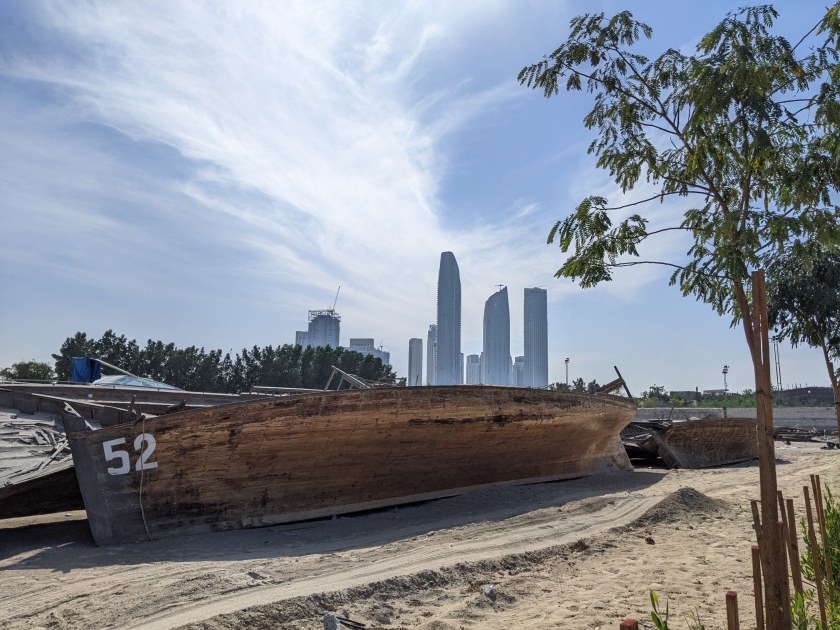
I walk home from the nearby Munich Finest Bakery with my children, one chewing salted pillows of soft pretzel and the other negotiating a fistful of croissant and the scooter he can barely maneuver at one and a half years old. I wonder which moments of their youth here in Dubai will lodge in their memories, and I feel worried and protective of their future selves, informed by early years in such a strange place, and such a strange time to learn the world. I hope that the worst of it will be displaced by recollections of sunshine, the flavorful, yearning dishes of immigrants, the surprise at brief shocks of rainfall, a dog’s single pawprint embedded mysteriously in the cement just around the corner from our door. I wonder if they will remember this place for what it is, or for what I try to make of it for them, and for myself. Their fragility is a breathtaking, startling paradox. Hard work is the strongest muscle I have, perhaps my greatest strength; yet the hardest work of my life has yielded the most fragile fruits, as all our lives are and the lives of newly-minted humans are, even more so.
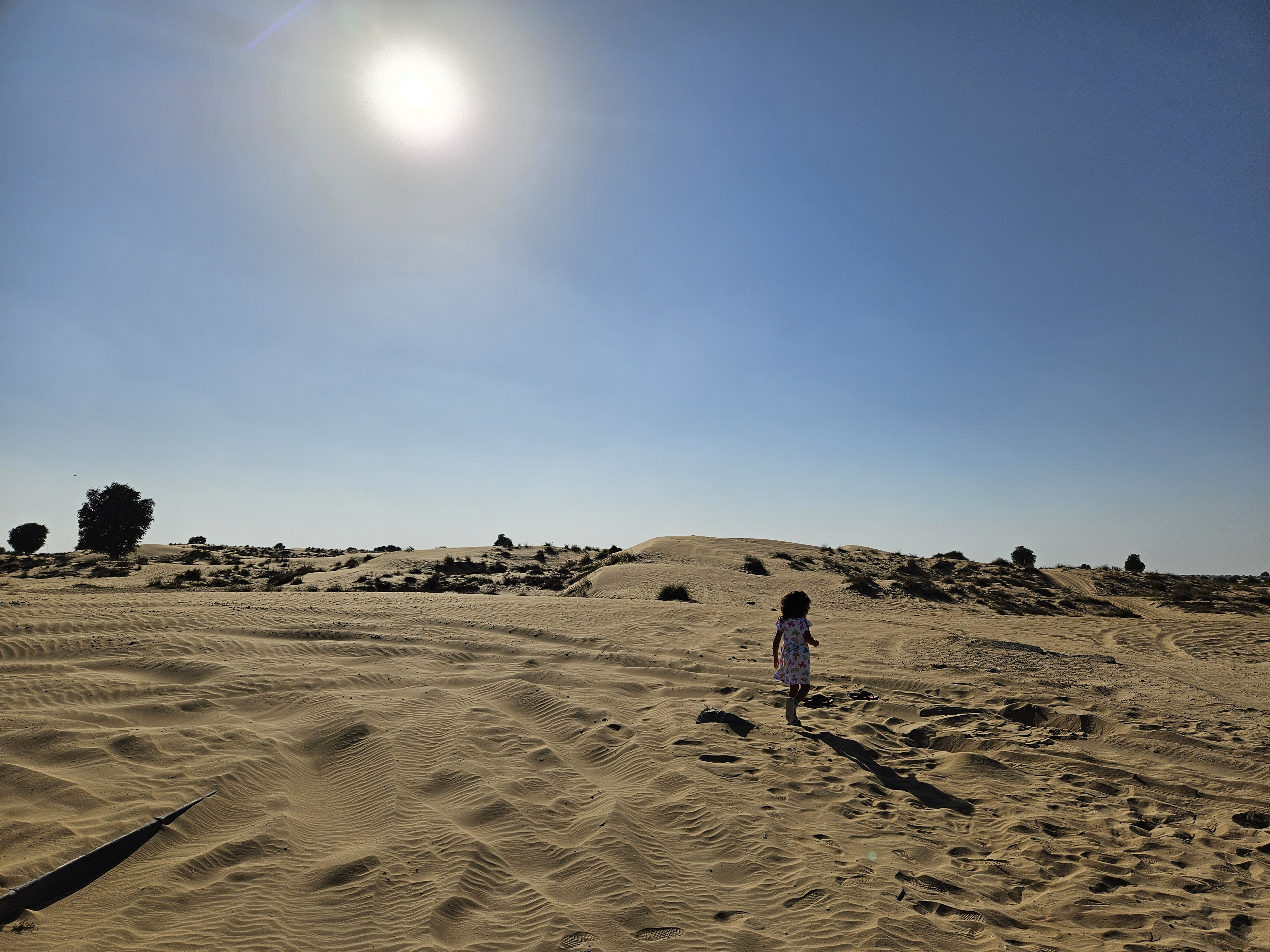
Sometimes, in half-slumber, I take mind-tours of my grandparents’ homes as I remember them in childhood. In Myrtle Beach, a judiciously air-conditioned haven from the suffocating, buzzing Carolina coast humidity. The deep, square sink where we washed sand off my cousin’s tanned feet after a day at the beach; the golden caster brackets gleaming at the feet of the kitchen chairs; the deep maroons of my grandparents’ bed blanket, the palm leaf tucked behind a portrait of Jesus; the claddaghs and Irish blessings framed upon the walls; my great grandmother sitting at the bottom of a pair of single beds in the guest bedroom; the candy wrappers in my grandfather’s flannel breast pocket, crinkling against sweet Irish ballads as I climbed onto his lap; my grandmother, gifted of the most infectious laughter, cracking open red pistachios in the Florida room. In Monroe, upstate New York, the gust of frigid air blowing in from winter’s darkest hours with a slam of the main door and boisterous greetings; the low-slung rooms set against each other with single steps like tectonic plates, yawning open in welcome to small children. Crackling fires, a view of snowy forest from a second-story perch, beckoning and then threatening as day turned to night. My grandmother’s bed perched atop a fine tatami mat, opposite paper-screen sliding doors in her bedroom meant to remind her of fond years in Japan.
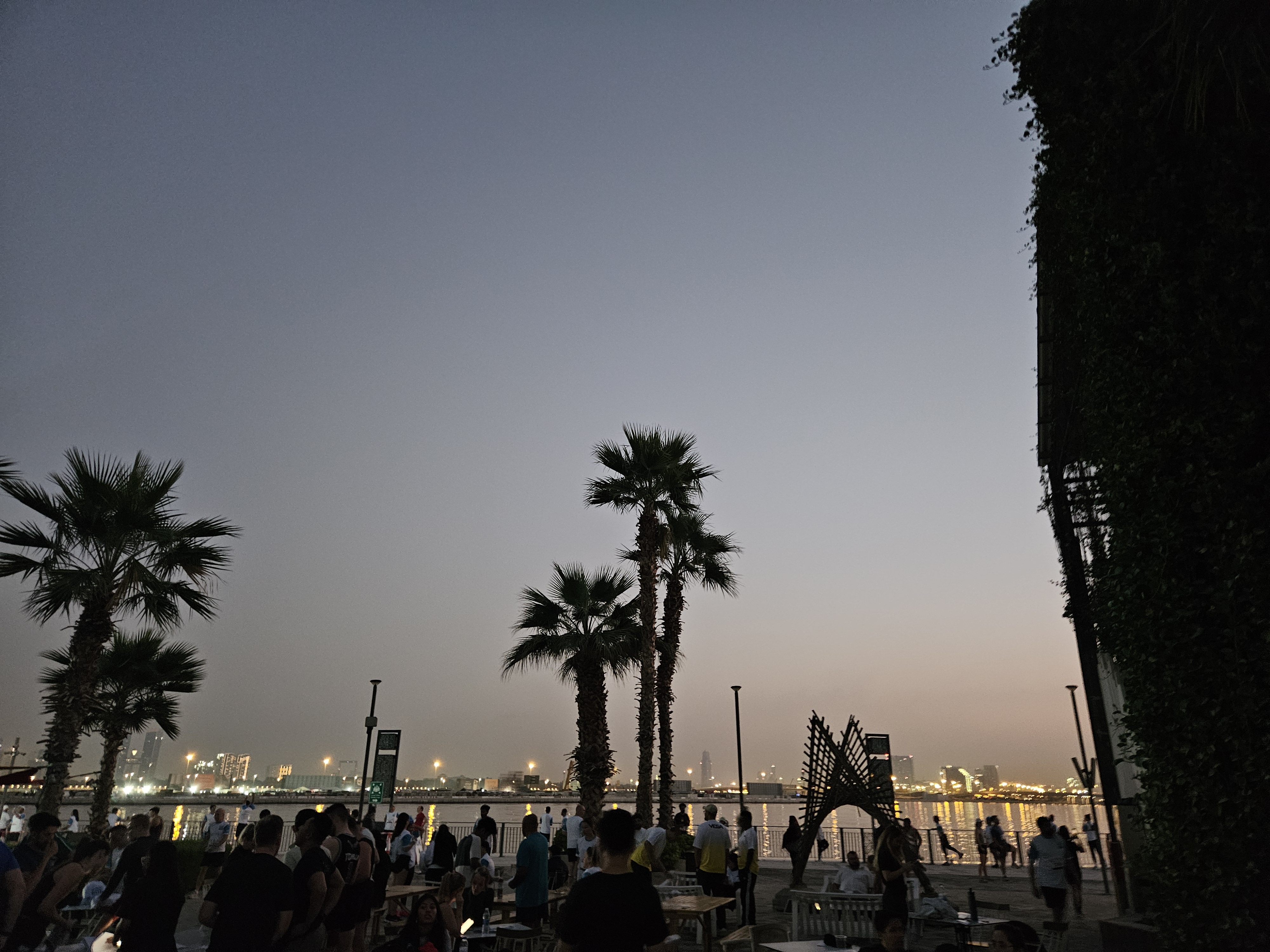
The great scenes from childhood rarely match adult perspective in scale or quality. In some ways I am glad that my grandparents’ homes are closed to me now – what good would it do to feel them smaller, duller, less haunted, less magical? I wonder what magic weaves itself for my children in our home now, a home that I judge endlessly for its flaws and the mess we bring to it – the cobwebs, the constant, shifting piles of dirty clothes, the marked walls, the counters never clear, the sinks never gleaming, the sand and dust that cake the windows.
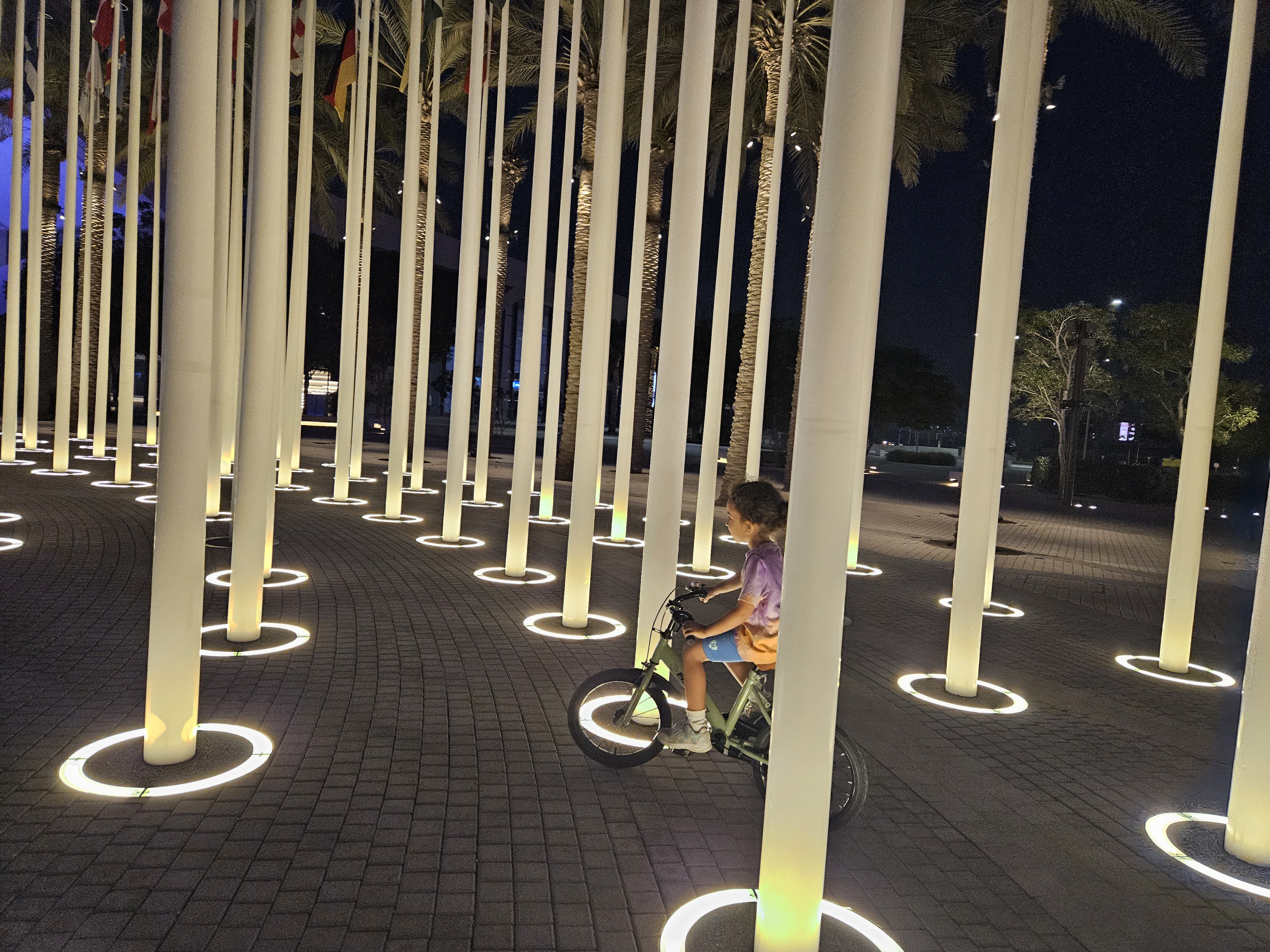
In our second newborn haze, a many-lettered diagnosis: an eye condition that was treatable but left me occasionally mis-sighted. I wonder at a still black dog seated on my path that reveals itself a snagged trash bag upon nearer inspection; I shield the baby against a daring bird diving for us that transforms just before impact into a flower loosened from a Delonix regia and dawdling on the breeze. Words on a page sometimes blur, sometimes hold their lines; lines on the highway sometimes merge in curious and impossible convergences. Sometimes–though not regularly enough for full, calculated adjustments–things are not what they seem, neither what I expect.
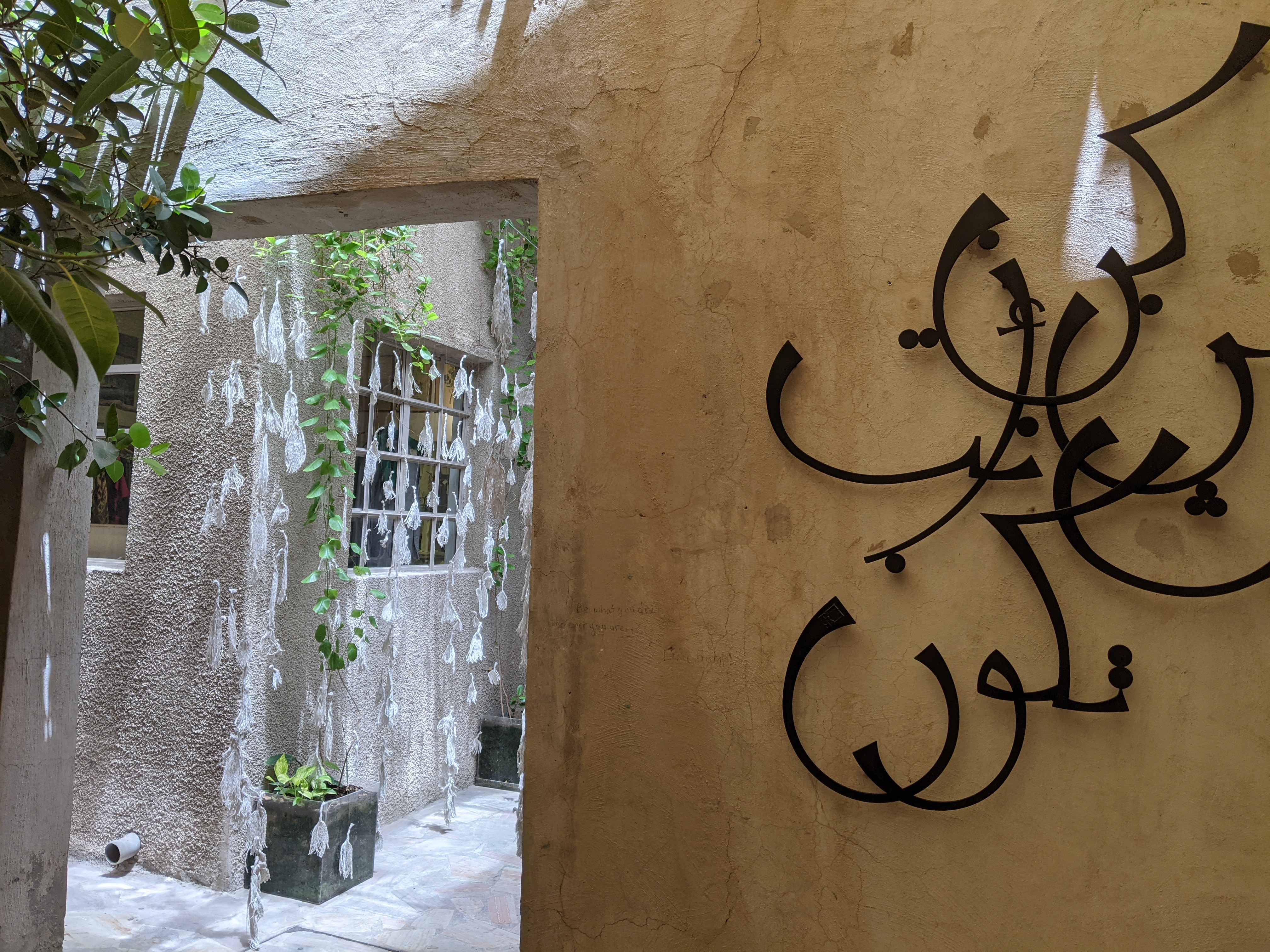
The same might be said for our home country–that it is not what it seemed, what we thought of it, what we imagined it to be at its best. There are rotted cavities where we believed integrity stood sentinel; insatiable greed overtakes our highest offices; lust for power barely bothers to cloak itself in political necessity; shadows of self-serving bigotry withstand–even taunt–the scrutiny of daylight. I wonder why, if the corpus Homo sapiens has evolved in studied progression over eons, our psychological maturity has not kept pace. We learn–and fail to learn–the same lessons our forebearers wrestled with, the same lessons of the Greek myths. Sometimes it seems we are regressing, navel-gazing with such intensity that we turn inside-out, eating our fragile world as we consume ourselves into oblivion. With age and maturity we find that nothing was as it seemed in our earliest days, nor ever.
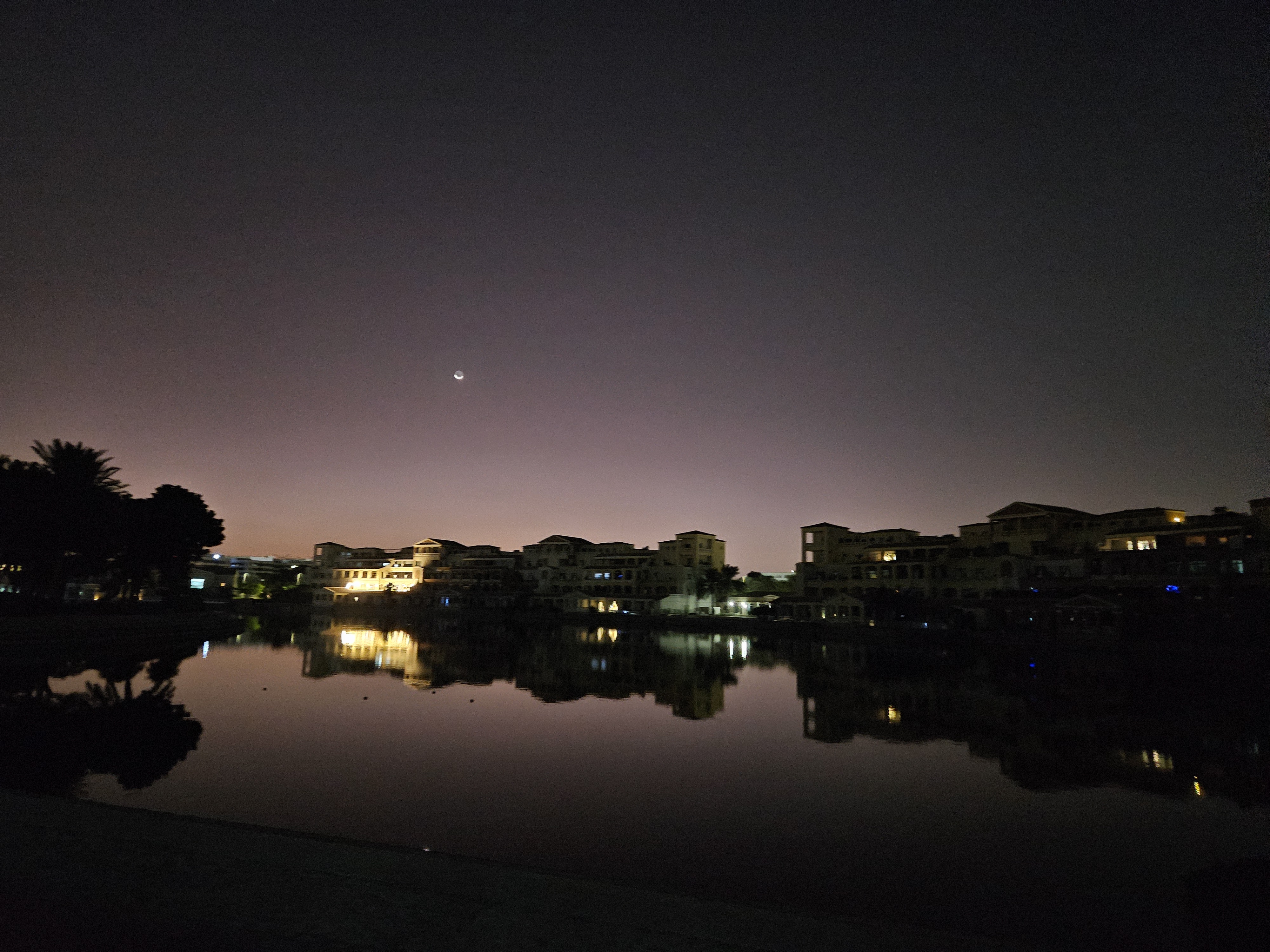
And how to reckon with the gap between what is apparent and what it belies? How to live there, in the rocky gorge of reconciling? That is the paradox of creating, that is the hardest labor of fragile things.
 outerNotes
Beautiful melancholy in a decidedly weird time. I love your descriptions of your mind-tours of the grandparents’ homes. I was trying to imagine mine – one image is of a sharp pain in my bare feet. We always went to Grandma’s house in summertime, and I was shoe-resistant, but I never forgot the feel of that big heating vent when I mistakenly stepped on it. Also getting permission to go in the root cellar where Grandma had little pink dixie cups of homemade vanilla ice cream in a reach-in freezer, topped with tin foil. Sweeeeeeeeet.
LikeLike