
what’s to eat #17
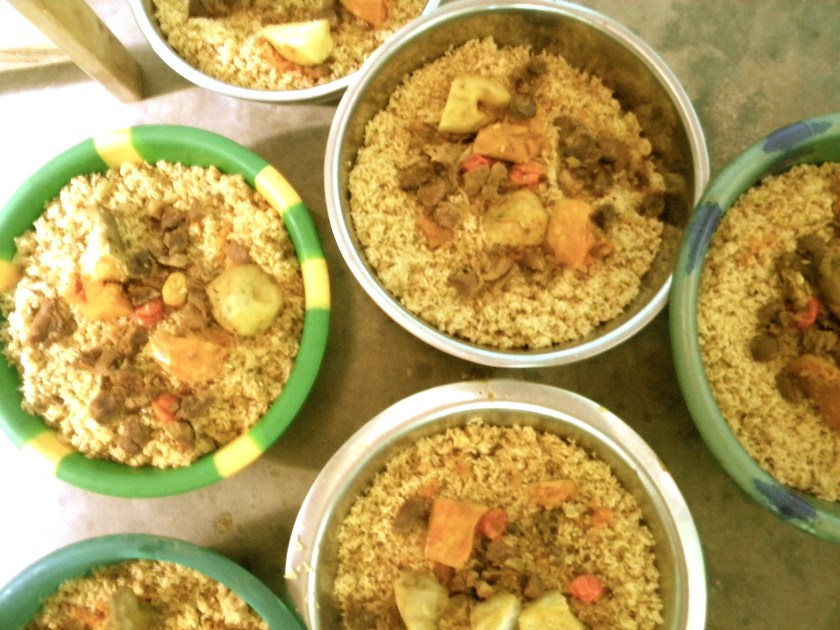
Lunch for a crowd, in Ouelessebougou: Riz au gras with veggies and lamb. These are, by the way, giant plastic tubs for washing clothes.
Lunch for a crowd, in Ouelessebougou: Riz au gras with veggies and lamb. These are, by the way, giant plastic tubs for washing clothes.
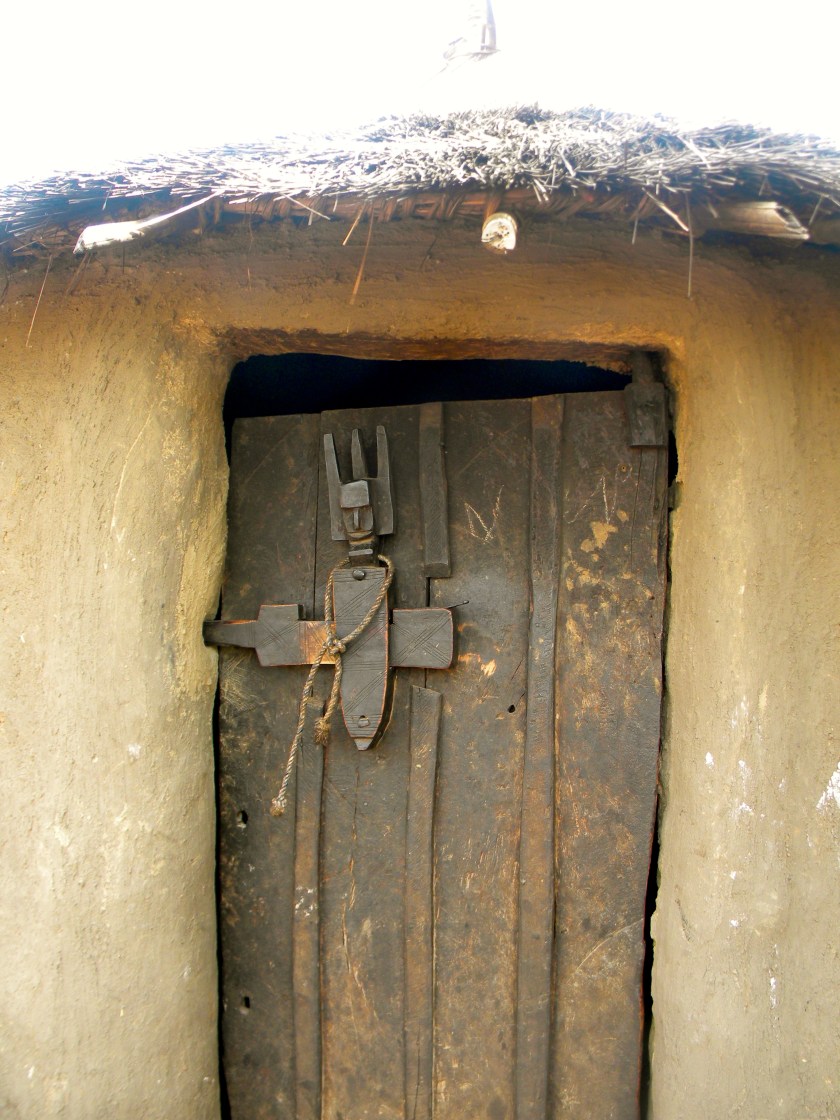
I’m in rural villages south of Bamako 1-2 times/week, where agriculture is king, extended families keep mud-brick homes in welcoming enclosures, and aged chiefs rule the roost. Of all the things to appreciate about these villages,* I get the biggest thrill from the fantastic design–of homes, shared spaces, meeting places, etc.–that abounds, sometimes running a common thread through the region, and other times rendering unique a particular locale. The materials are relatively standard, but creativity is not lacking; function and form are perfectly served. Here’s a start: Working arbors and trellises: To train gourds, grape vines, and other edibles… …to give shade to livestock, and keep a house front cool. Door and window detail: And stenciling, just for the sake of beauty (or so I was told)…. More to come–there’s always more. *The second-best aspect might be the village names, mouthy, ping-ponging, and overflowing with vowels: Ouelessebougou, Tinkele, Bananzole, Marako, Tounoufou, Bagayokobougou, and on and on.
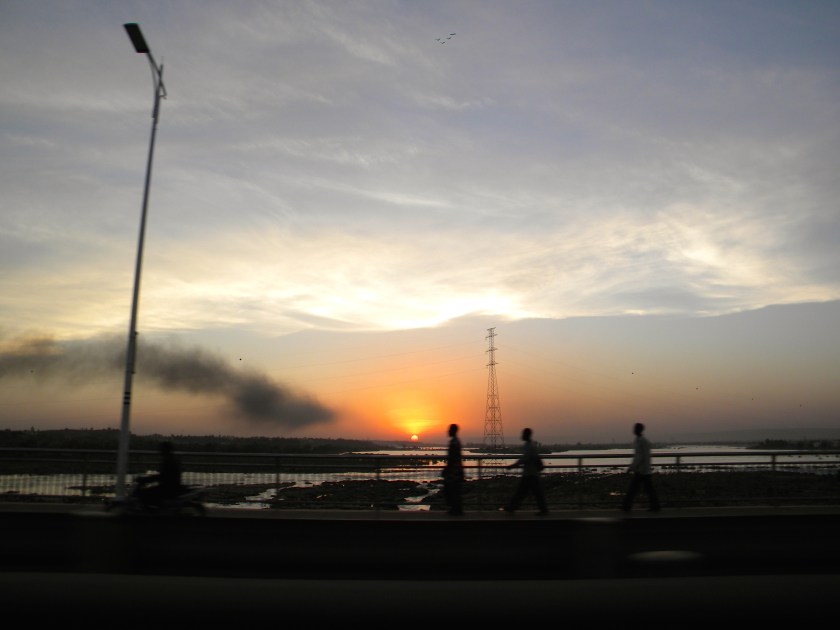
Lately, the chickens hang upside-down clucking into a suffocating wind. Cattle mutiny on the bridges. Rams roll through town, bound at hoof and horn like criminals. Wild dogs run backwards through the streets, chasing little boys, tails first. Curtains of dust hang heavy, draping leaves and eyelids and veiling moon from sun. Heads sit low under trees swollen with ripe fruit. They swarmed like bees–have you seen bees swarm on honeycomb? They swarmed– ripping down the side of the road. Pressing forward, closer, filling every gap with fingers and eyes: tonight, they burned a thief. Photo of Bamako’s 3rd bridge over the Niger River, at dusk.
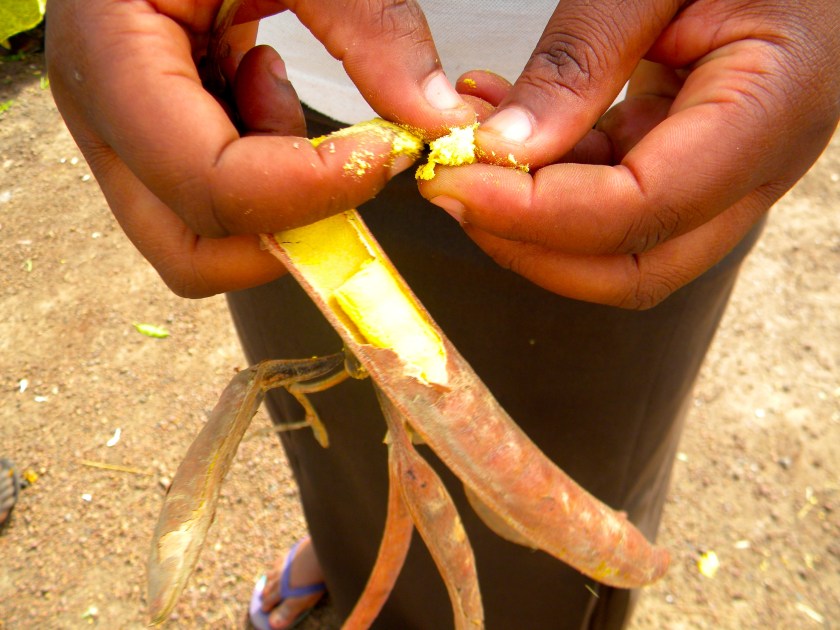
Many Good Things come from the fruit of the néré tree, and earlier this week I had a taste of one. In the village of N’korobougou, around 9am, children pranced and flopped about, munching on bright yellow balls nearly the size of their heads. I needed an explanation, and a bite. Turns out the balls were made from the sandy, bright yellow pulp of néré tree pods. The pulp is extracted, sifted, cooked with water and salt, and packed into tight balls that keep for days and days. A bit like a savory rice crispy treat, made of cornflakes. Excellent, really excellent. A sticks-to-the-ribs sort of breakfast, apparently also good for warding off malaria and bacterial infections. I suggested a touch of honey, but I was not taken seriously by the powers cooks-that-be.

I am thrilled to announce that Mali is this year’s winner (country division) of the 4th Centennial Global Tree Competition! It’s been a rousing century of cutbranch…er, cutthroat competition since the last Deciding Votes were cast (September 1914, GTC Society Phuket Conference). Voting took ages (and I mean ages) as four generations of Contributing Judges reviewed and scored over a thousand entries. Every 25 years, competitors are ranked according to various qualifying criteria in their respective categories. In the 100th, Voting (or Deciding) Year, winners are selected by a team of Deciding Judges based on a century’s worth of careful deliberation. (The 100-year cycle allows for the full development of interested candidates). The categories are many, reflecting the global diversity of Trees: Best Single Deciduous, Best Tropical Ensemble, Best Forest (rainforest reps continue to lobby for a unique category), Most Significant Shade, Best Fruit-Bearing, Most Character, etc. Additional categories are geographic, by country, municipality, or region. And this year, Mali took the Country category by storm! Just look at what Mali has to offer, in breadth …
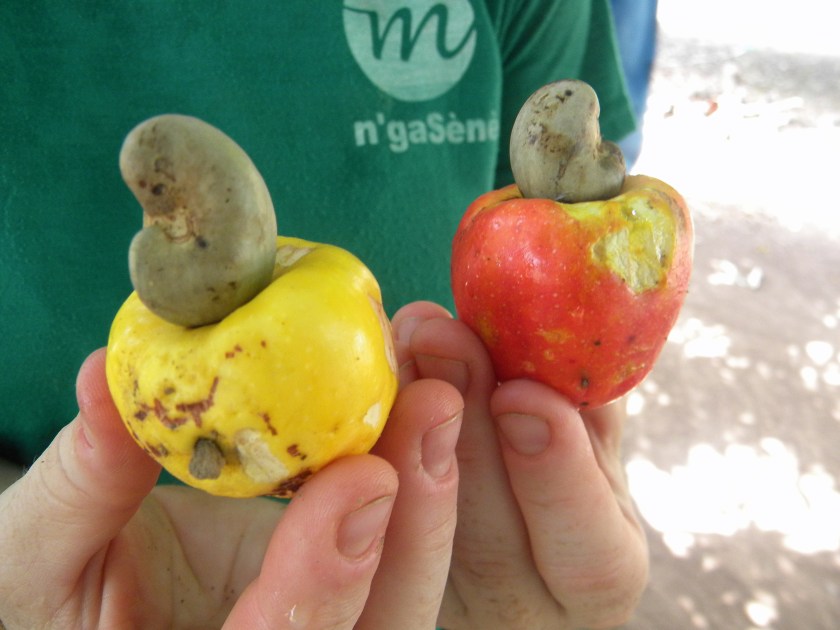
Surprise of the day: these apple-y looking fellas are cashews. the cashew nut (seed) attached to the cashew apple (fruit), pulled from a cashew tree (tree). The apple tastes like a proper Concord grape, with a bitter bit at the end; the nut is toxic until heat-treated. Ten points and a round of applause to Nature: Excellent work! Ferekoroba Village, Mali
 outerNotes