Author: erinwrote

on what’s easy

Found myself guilty of that slippery, easy, well-intentioned mistake of cultural re-adjustment: Believing that all people, deep down, are essentially the same, and gripping that belief as a compass through foreign territory. It’s not true, of course; there are deep and oft-divisive differences. But the big problem with the we-are-same perspective is that it’s my same informing my assumptions. How are we the same? In what ways? If any one person answers these questions, the response is rendered invalid on a collective level. What I see or expect to be equal or translatable or essential comes from my own subjective perspective. When you get down to it we are not, in fact, the same. And we are certainly not the same in any way definable by me alone. It feels like swimming in deep water, searching with your feet for something to stand on, lurching forward–sometimes in a panic–to get to solid ground. It can be deeply unsettling to realize that, in intercultural dynamics, there is no ground to stand on: it’s all about the swim. There is no quick …
on listening

In some neighborhoods of Bamako, houses and their yards are enclosed by high walls; some are grey cement, some are painted, and others have wild and intrepid foliage spilling over their tops. A single wall separates one house from another, obscuring the view but not much else.  From my kitchen, I can just see over the wall and into the next door courtyard. On the other side lives a large family whose patriarch is very old, very loud, and more or less unhinged. He usually wears purple bazin, he doesn’t see well–perhaps at all–and occasionally he shakes, a shock running through his body from hand to foot, or head to knee. But this isn’t about what’s to see; it’s about what the wall can’t keep out: the sounds this old man makes, to an audience he alone perceives, and extra loudly when the rain comes. Most of what he says is incoherent, but there is one word that pierces the verbal fog with thunderous effect: Allah. It comes down heavy, and urgent: Allah. Sometimes the word punctuates his …

what’s to eat #2

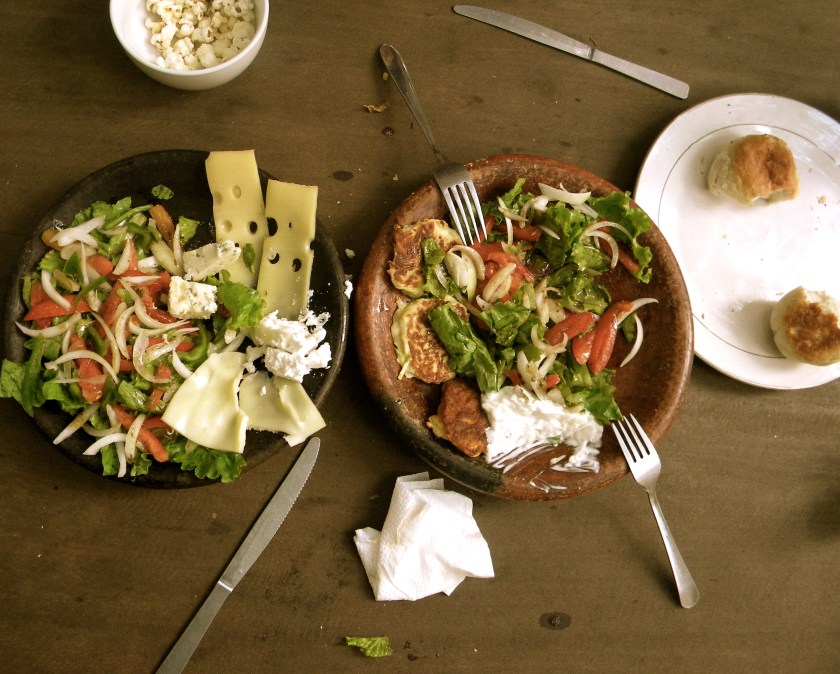
A mid-afternoon office snack of Le popcorn or, as it’s known in Bambara, kabani (lit. corn-little), dusted with an addictive combination of powdered milk and sugar. The dried milk, once saturated by your salivary glands, renders the popcorn creamy and sweet in your mouth. It works, it really works. Enjoyed with coffee and tea.

on eid

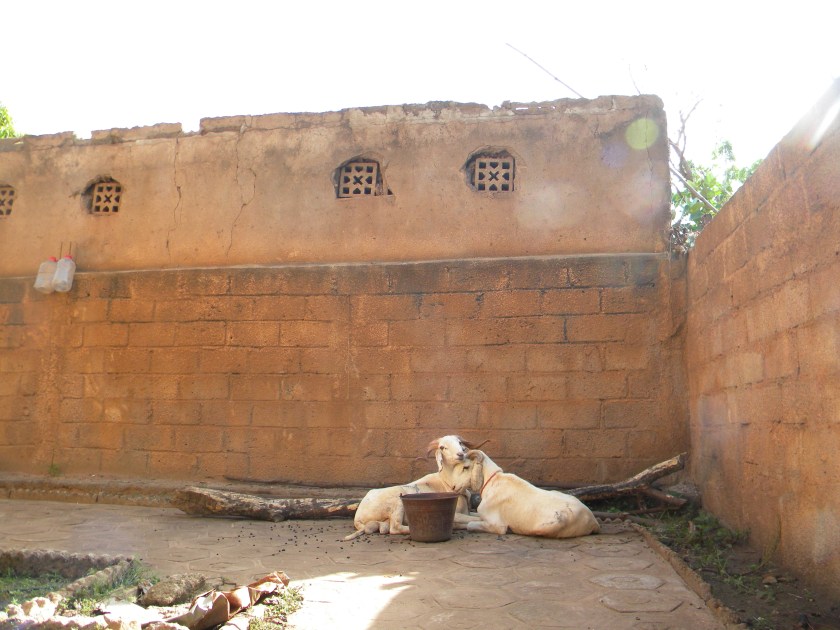
The most startling aspect of Eid Adha, or Tabaski, is not the booming accumulation of sheep in the city. Nor is it the strange and creative modes of transport for those (live) sheep: buses, trucks, the backseats of cars, strapped to the tops of taxis, hidden in half-closed trunks, the laps of motorcycle passengers, etc. It’s not the constant bleating from sheep tied up to trees and poles in every neighborhood. Nor is it the Thanksgiving-esque mad dash for sheep the day before the holiday, by those who put off the task. The most startling part is the sudden, eery absence of sheep on the very afternoon of Tabaski. Leading up to the holiday, It seemed as though there were more sheep in this city than people; and all of the sudden, half the population disappeared. The bleating ceased, and skins hung to dry over walls and doorways where sheep grazed and rested only just before. Eid Adha, festival of sacrifice, festival of gratitude. According to tradition, and the prophet Muhammad, the first morsel of …

on feeling nutty

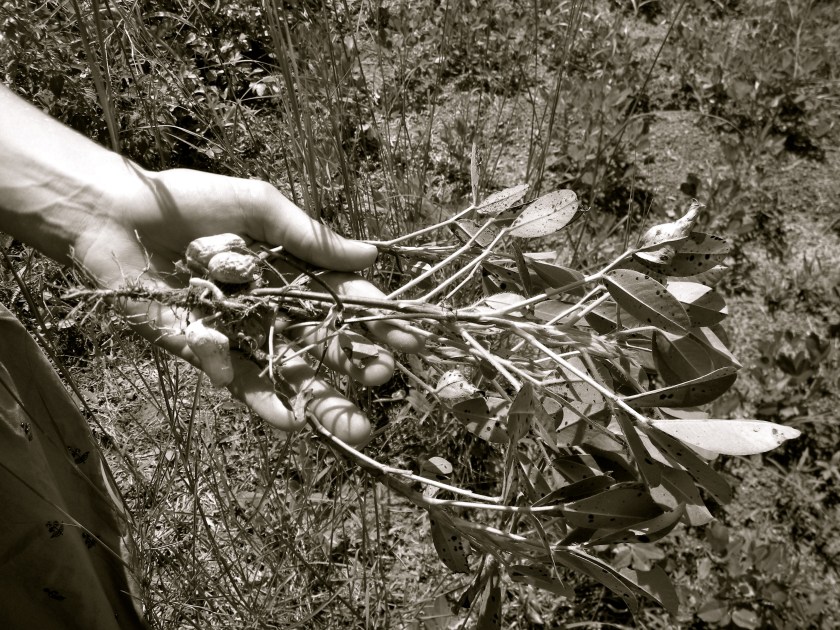
In moments of hazy confusion I mix languages, I forget cultural basics, I speak of “here” as if I were elsewhere, I wake from sleep unsure of where I am. Peanut plant pulled fresh from the earth in Sinsina village,  offered as a gift. This is the hand behind this awesome blog, most recently on aid work in the Central African Republic, but on many other things as well, and also the hand behind this moving, inspiring, and oft-hilarious twitter feed. major props, my friend.