
what’s to eat #21
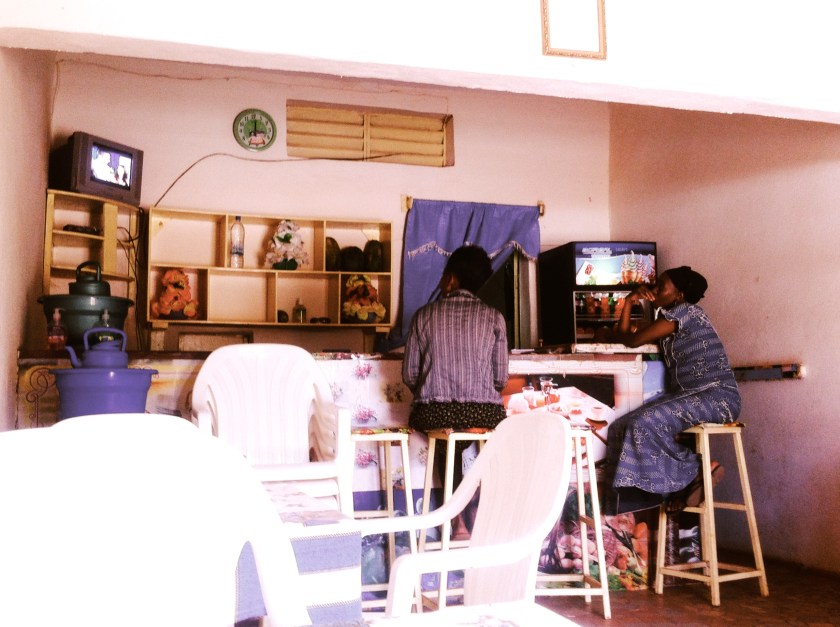
A late breakfast in Sevare, Mali, where I escaped to for the holidays this year: a Malian standard, the brochette plate.
A late breakfast in Sevare, Mali, where I escaped to for the holidays this year: a Malian standard, the brochette plate.

Bazin, in all its sartorial glory: billowing swaths of starchy, stiff fabric, to make any regular person seem instantly regal (and, in the hot season, suspiciously insulated). Bazin is an Instant-Royalty sort of trick that nudges the back of your mind with thoughts like “Where’s he going?” “Who could she be?” and “What a handsome couple they make!” I hadn’t been to a bazin atelier previously, though I’d seen the flags of fabric clipped to clotheslines and flapping in the breeze from afar. A friend asked me to take a few family photos at just such a spot; It was a brilliant idea, and played beautifully in photographs. Here are a a few, mostly from the “B-roll.” Bazin is a Malian specialty, and ateliers pop up throughout the city and on its edges, inside markets, in back alleys, and in cramped residential neighborhoods. The women who dye work hard, bent at the waist over buckets of dark liquid, creating something akin to the most impressive tie-dye job you’ve ever seen, yielding a dignified stretch of fabric with haute …
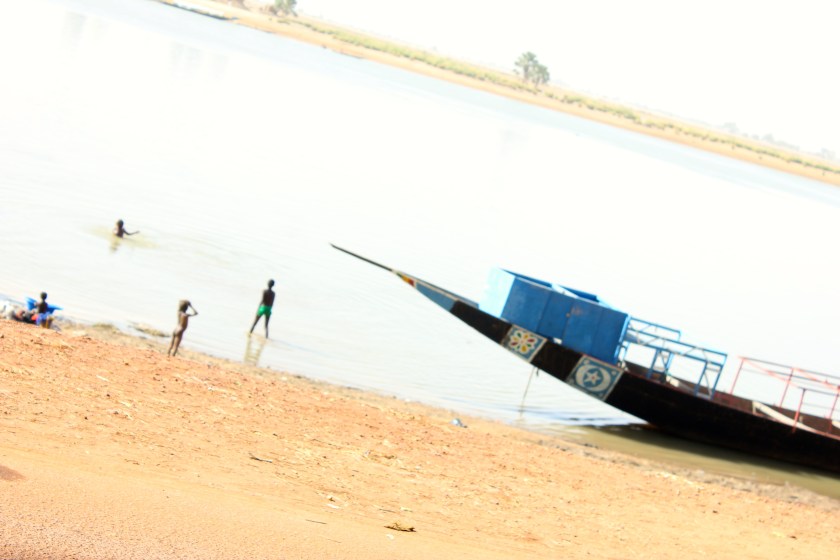
When extremes feel de rigueur, it’s a challenge to stay balanced. I want to walk life’s tightrope with confidence, as if it were a line painted on solid ground, but so often my thoughts – concerns, projections, expectations, memories – pull me in one direction, and then another, until my feet dance to the rhythms of my mind and they barely touch the ground. Yes and no, fear and courage, action and inaction, energy and exhaustion, pushing and pulling, intention and submission, giving and receiving, accepting and rejecting… But then, the extremes also feel natural, in a way that is wholly me, for better or worse. I wonder whether it’s the tension between them that keeps me upright–if not for that tension, Perhaps i’d have no momentum. Perhaps it’s the swing of the pendulum that keeps the clock ticking. It’s a bit frightening, as stillness of the mind is my ideal. But maybe i seek an unnecessary, false perfection. Perhaps movement is innate and, judgement aside, it can blossom into something steady, a thing to be counted …
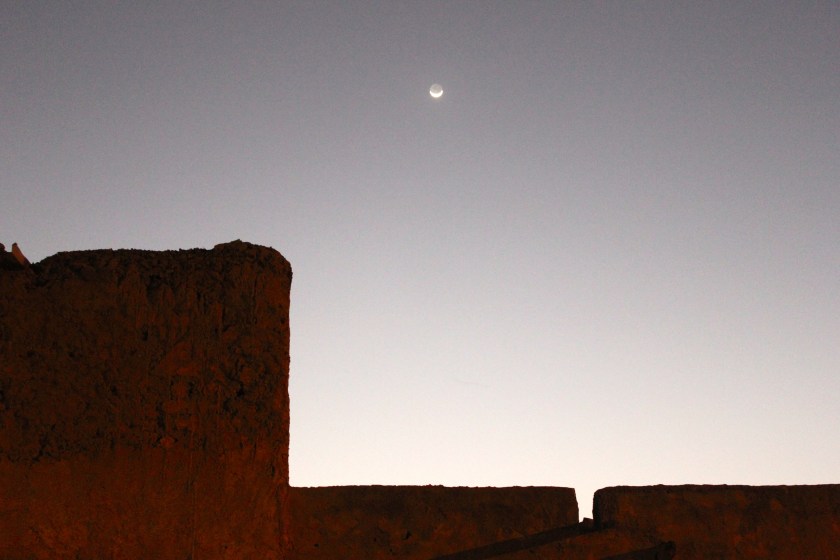
I spent Christmas Eve and day in Bandiagara, some 65 kilometers outside Mopti, in Mali’s eastern pocket. I was stuck somewhere between wanting to Christmas (ahem, I verbed that word) and wanting to avoid it altogether. Regardless, the night sky insisted I be at least grateful for family, friends, and good fortune, even if I felt momentarily far from all three. I recently read a few words on the magic of Christmas Eve, beyond religion, and this was the spirit I kept with me through the chilly night and the frosty beers. In the morning (well, more like lunchtime) the eating options in Bandiagara were scarce. All the brochette ladies were sold out; no one’s rice had come in yet. In the Christmas spirit of hasty mangers and serendipity, we made do at a small boutique with a front porch and a picnic table. Fresh baguette, omelette for three, and the kind of fried, canned meat whose mystery should remain just that. Actually, this was some sort of pressed chicken, although the Malians in my company insisted that all meat …
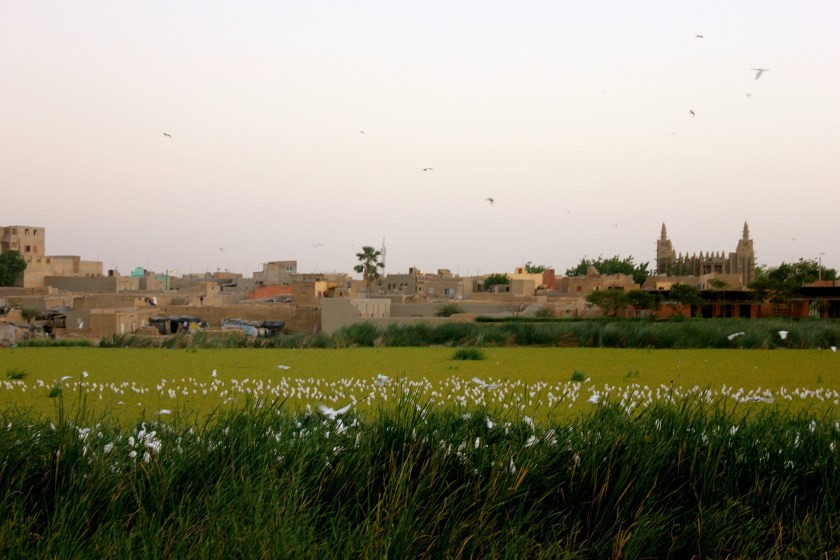
In an effort to avoid another lonely Christmas in Bamako, I headed eastward. First to Mopti, an island among floodplains sprouted with rice and replete with boats, fishermen, birds, and beautiful Sudo-Sahelian (Sudo like Sudanese) architecture, with a mosque to rival the best. On to Bandiagara, gateway to Dogon country, for an escaped Christmas Eve. 65 kilometers by moto on a mostly deserted-road [we did spot a camel!], but quick as a whistle if you ask me. We toured the town on foot, had our fair share of Castel beer, and I thanked the stars as often as possible for sticking with me through thick and thin, but mostly thin. Bandiagara and the villages around it feature truly stunning stone architecture, a distinct departure from the mud brick and adobe that defines so much of Malian homes and other buildings. it’s unexpected, and distinguished, and I daresay downright magical. For a final excursion, we headed to Djenné, old trans-Saharan trade partners with Timbuktu, and accessible by ferry most of the year round – a ferry piled with …
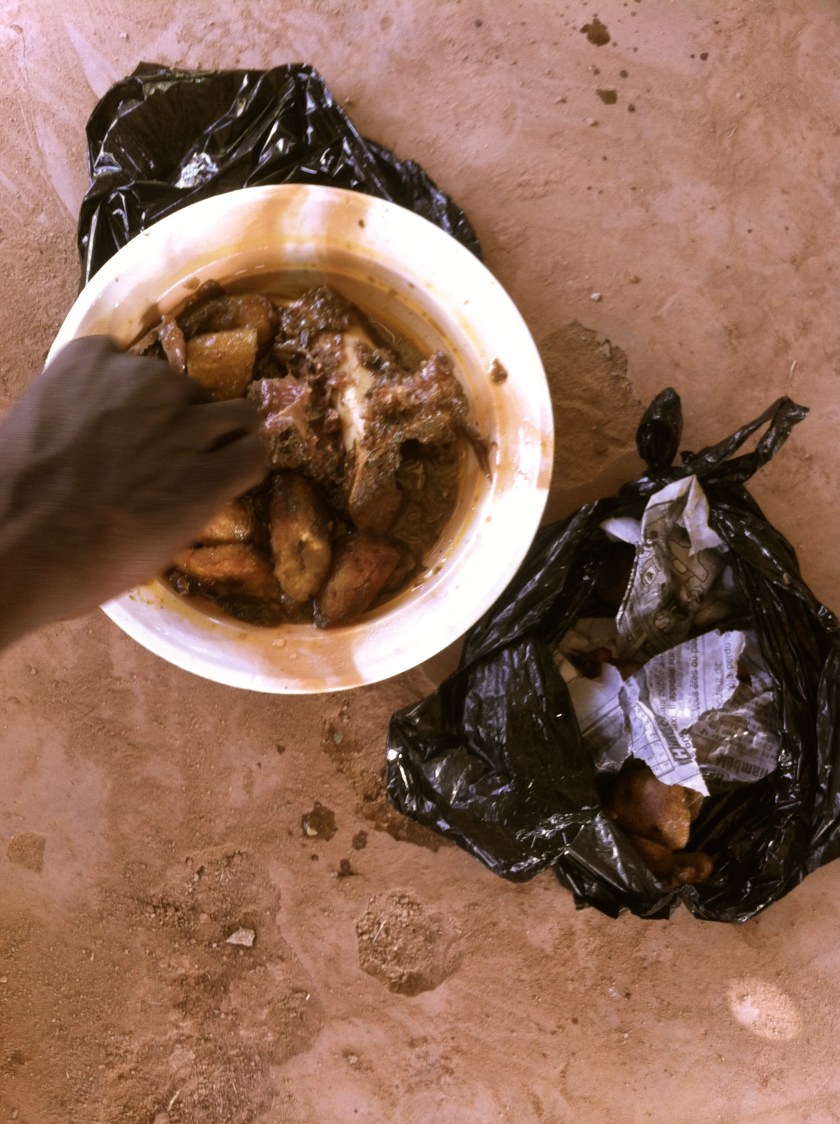
Frou frou, or millet flour beignets, served here with a street-side morning dish of slow-roasted lamb in a green sauce with fried, sweet plantains. This satisfied a breakfast quartet, eaten by hand on the floor of a dusty boutique in Dialakoroba village, south of Bamako.
 outerNotes